

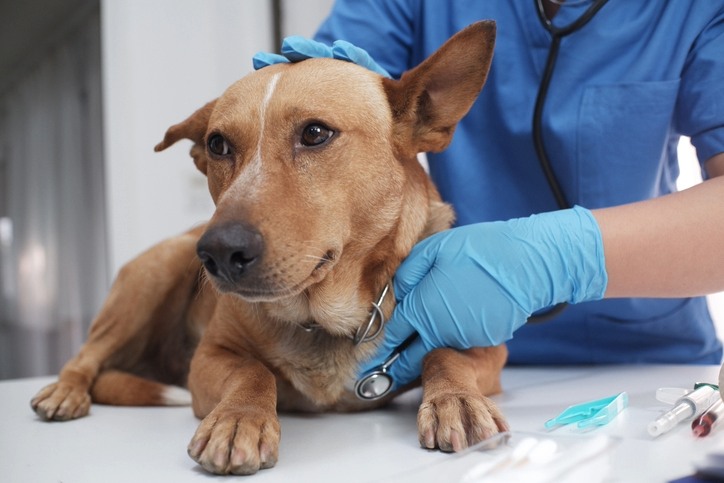
Unfortunately, puppies don’t understand why vet visits are important. They meet unfamiliar people, who prod, poke, and handle them in strange ways. The vet office might smell funny and your dog will hear loud scary sounds. When left unaddressed, negative experiences at the vet will often snowball into future intervention of the staff, whether that’s restraint, muzzle, or medication. It’s essential to build a positive experience at the vet while the puppy is young, so your puppy is set up for successful and stress-free visits throughout their life. In this blog we will discuss how to help your puppy feel comfortable at the vet.
Why early preparation matters
If left unaddressed, behavioral problems often worsen and intensify as a puppy ages. Even if they don’t intensify, a squirming 10 pound puppy will soon turn into a squirming 50 pound dog. By identifying signs of stress at the puppies first visits, you can address the problem head on and set your puppy up for success. Look for behaviors like the puppy squirming, trying to escape, shaking, or acting avoidant of the vet staff.
How do we make your puppy feel more comfortable at the vets?
It starts by building positive associations with events and activities that are similar to those at a veterinary clinic. This includes having your comfortable with having their paws held, being picked up, having their mouth and ears examined and light physical restraint. With practice, your puppy will be less aversive to these events. To help with this, we will discuss some body handling exercises.
Body handling to prepare for the vet
It’s important that your puppy is used to being touched and handled at home so they are more comfortable at the vet’s office. You should focus on body parts that are most commonly examined at the vets, including:
- All four paws
- Mouth
- Ears
- Eyes
- Collar Area
- Belly
- Hind and tail
When handling your puppy, you can position them either on their back or between your legs, sitting in front of you, or standing in front of you. By pairing gentle touches with treats and praise, you are building a positive association with body handling.
Is your puppy squirming? Touching your hand with their mouth or avoiding being touched? You can reduce the intensity of your handling and increase how often you are offering them treats.
If your puppy isn’t interested in the treats, you can offer them more enticing rewards. This includes cheese, peanut butter, chicken, and deli meat.
Body handling exercises are essential to help puppies develop positive associations with being touched. But socialization is also crucial, so your puppy is comfortable with new environments and people.
Socialization
Socialization is when you expose your puppy to new environments, including people, smells, sounds, and other dogs, so that they can learn more about the world and become less fearful of being in public. The goal of socialization is that your puppy is comfortable in a variety of settings.
Your puppy’s prime socialization time is between three and twelve weeks old. This means that if you adopt your puppy when it is eight weeks old, you have four weeks to introduce your puppy to new experiences. To do this, you should:
- Explore new locations each week
- Interact with new people each week
- Pair each experience with treats and praise
- Avoid dog parks; instead, organize playdates with healthy, vaccinated dogs until your puppy is fully vaccinated
You can still socialize your puppy after this period, but it’s best to socialize them in the eight-to-twelve-week window.
Need ideas on where to go? Check out some of our favorite dog-friendly places in Kansas City to give your puppy the experiences they need:
Pairing exercises at the Veterinarian’s Office
Now that you have practiced socialization and body handling exercises with your puppy, it’s time to apply pairing exercises during your veterinary visits. When taking your puppy to the vet, bring high-value treats with you, such as pieces of chicken or jerky cuts. Ask your vet if you can give your puppy treats while your vet handles them. Offer treats during challenging moments, such as when your puppy’s paws or ears are being examined.
Watch for any signs that your puppy is uncomfortable; this can include your puppy wriggling away or showing the whites of their eyes (whale eyes). Give more treats if they seem uncomfortable. Over time, you can reduce the number of treats given during vet visits.
We’re here to help:
Would you like help teaching your puppy obedience commands, manner, or addressing any behavioral concerns? You can schedule a free consultation with our Pet Behavior Team. All of our programs are conducted through one-on-one training sessions held at your home and in your local neighborhood.
Do you prefer to connect remotely, or live outside our service area? Our co-founder and Certified Applied Animal Behaviorist, Dr. Echterling-Savage, provides virtual consultation programs. During these programs, she will develop a customized training plan that provides support to achieve your training goals.


