Have you recently brought your puppy home? It can be difficult for a puppy to transition from being with their mom and littermates to their new family. So how do we help a puppy comfortably adjust to their new life and help prevent them developing separation anxiety behaviors? Crate training is a great way to help your puppy be more comfortable in their own company, and to help keep them safe when you aren’t able to monitor them. In this blog we will discuss how crate training helps prevent puppy separation anxiety.
What is separation anxiety?
During the first few days at home, your puppy may experience a fair amount of anxiety, stress, and loneliness while adjusting to their new life. Without the right balance of quality time and time alone, your puppy may be more likely to develop separation anxiety behaviors.
Separation anxiety occurs when your puppy is highly stressed when left alone. Behaviors of separation anxiety include:
- Excessive barking or crying
- Scratching and chewing at doors, walls or the crate
- Going potty due to stress, which is more obvious when potty trained puppies go potty inside when left alone
- Increased salivation
Separation anxiety behaviors and normal puppy behaviors
These behaviors do not always mean that your puppy has separation anxiety. It’s normal for puppies to cry during their first times in their crate. Your puppy may cry in the crate because they are seeking attention.
You may even be reinforcing attention seeking behaviors without noticing. For example, if you comfort your puppy when they whine by saying “It’s okay”, or take them out of the crate when they whine, you can reinforce these vocalizations. Your puppy will learn that crying gets attention from you, or even that it gets them out of the crate.
Crate training can reduce these separation anxiety behaviors
Spending plenty of quality time with your puppy is important, but so is teaching them to be comfortable when you are not right beside them. Giving your puppy appropriate periods of alone time from the beginning can help them become more comfortable with their own company and reduce the likelihood of separation anxiety behaviors developing.
By spending short periods of time in the crate, your puppy can gradually become more comfortable spending time on their own.
A good time for your puppy to have time alone is after exercise. You can’t always monitor your puppy, and crate training is a great way to stop them from chewing on things they shouldn’t or going potty inside the house.
So, how can you encourage your puppy to like the crate? By teaching them positive associations with spending time in the crate.
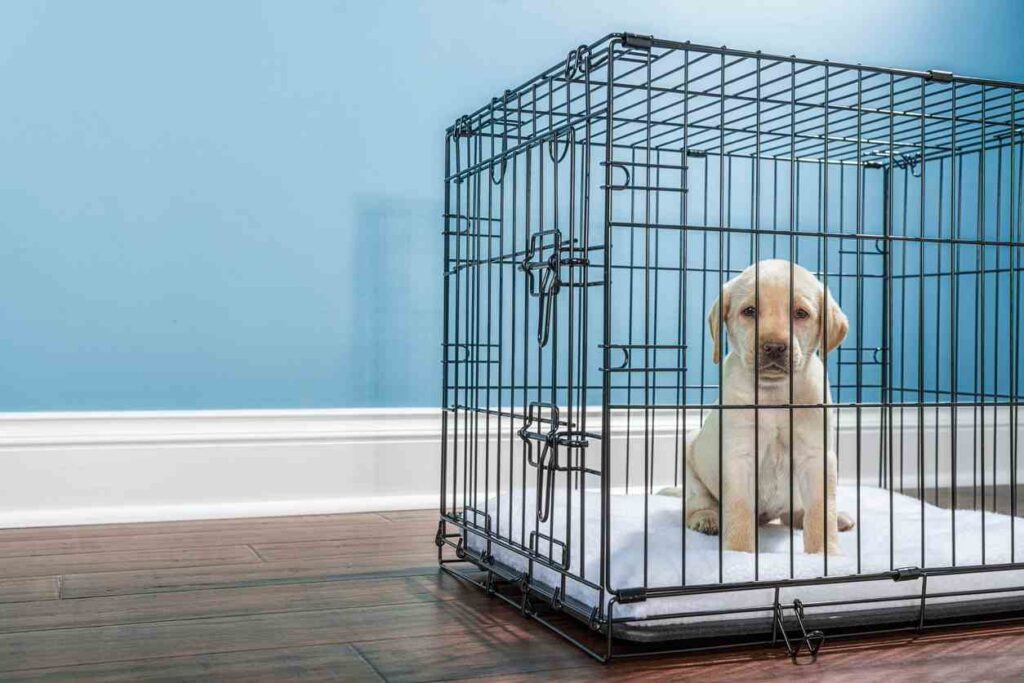
Positive associations with spending time in the crate
Positive associations include treats, praise and toys that are given to them when they are in the crate. This can include giving them a peanut butter Kong when they are in the crate. If your puppy gets a delicious treat and mental enrichment every time they are in the crate, then they are likely to associate it with being a good experience.
Do you need help preparing a succulent meal for your puppy? You can check out our “How to Stuff a Kong Like a Dog Trainer”.
Now that we have covered what separation anxiety is, the benefits of crate training and how to develop positive associations with the crate, let’s discuss how to help your puppy feel comfortable during their first few nights at home.
Crate training at night
During the night, your puppy should be in a crate. The crate should be in your bedroom where they can still be close to you. The transition from sleeping in a litter can be hard, so placing the crate near your bed will help them to be comfortable.
If your puppy starts to whimper you can place your fingers in the crate, so that they know you are there for them. You can move the crate further away from your bed each night as your puppy gets more comfortable and to where you want the crate to stay in your bedroom.
Can Crate Training Be Included in a Board and Train Program?
Crate training is just one of the skills your puppy can learn during a Board and Train program. During our Board & Train Wellness Retreat, your puppy lives and trains with our co-founders, Dr. Kristyn Echterling-Savage and Sean Savage, in their Tampa Bay home.
Our Board and Train Programs teach puppies and dogs high level obedience and good manners, as well as addressing problem behaviors including separation anxiety. We offer Dog Board and Train Programs nationwide. As well as virtual training programs with Dr. Kristyn Echterling-Savage and in person training programs in Tampa Bay, Sarasota, Houston and Dallas.
Our Board and Train Programs teach puppies and dogs high level obedience and good manners, as well as addressing problem behaviors including separation anxiety. We offer Dog Board and Train Programs nationwide. As well as virtual training programs with Dr. Kristyn Echterling-Savage and in person training programs in Tampa Bay, Sarasota, Houston and Dallas.
You can contact our Pet Behavior Team for a free consultation, where we can chat with you and provide a personalized recommendation that meets your needs. We recommend checking out our Board and Train blog or our TikTok channel.