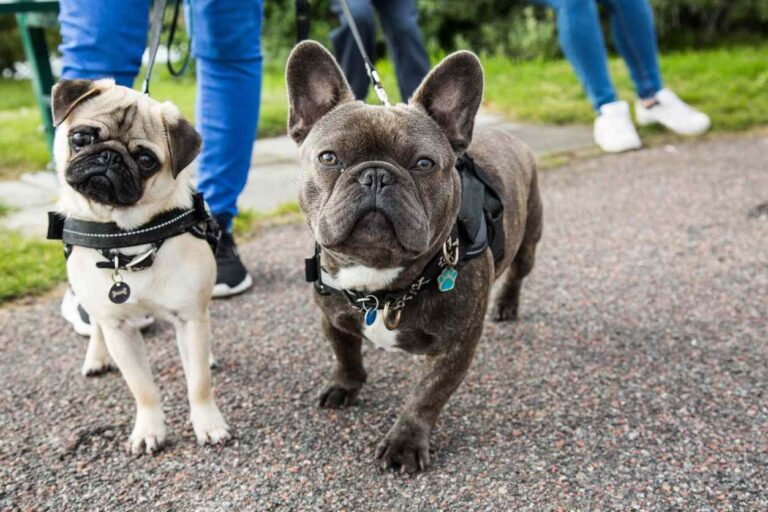
It can be difficult to learn how to read a dog’s body language to understand more about their intentions or feelings. After all, a dog won’t provide signals like nodding in agreement or shaking their heads in disappointment. And while some dogs are especially skilled at vocal “conversations” (as many Husky owners will know), they unfortunately lack the articulation, but not the enthusiasm of human speech.
Dogs communicate their intentions and feelings through body language. Particularly through their eyes, ear, mouth and tail and overall weight distribution. Learning to read these signals can help you to recognise cues. Including if they are relaxed, want to play, or are showing warning signs that they will engage in reactive or aggressive behavior. In this blog, we will help you learn how to read a dog’s body language. Let’s start by explaining the behavior scale.
The Behavior Scale
There are three behavior scales that can provide us insight into a dog’s behavior. These stages are friendly behavior, neutral behavior and then precursors to reactivity or aggression.
- Friendly behavior is often attention-seeking, they want to play with you, or are at least pleased when you approach them.
- Neutral behavior is when a dog is comfortable and is not seeking attention or interaction, but is still approachable. Perhaps your dog is sun baking or just casually observing their surroundings.
- Precursors to aggression and reactivity is a stage full of warning signs. It’s very important to understand these signals, because if they are not heeded, then the dog may display aggressive behaviors such as barking, growling and lunging at other pets or people.
To help you understand the behavior scale we will discuss further on how to spot obvious and subtle shifts in body language during all of these stages. We should also remember that every dog is unique. It’s important to consider a collection of behaviors rather than a single gesture. These signs are a generalization of behavior signs, but certain dogs may show slightly different signals. Let’s look over a dog’s body language by levels. Which will help us to get a more complete picture of how a dog is feeling.
Friendly Body Language
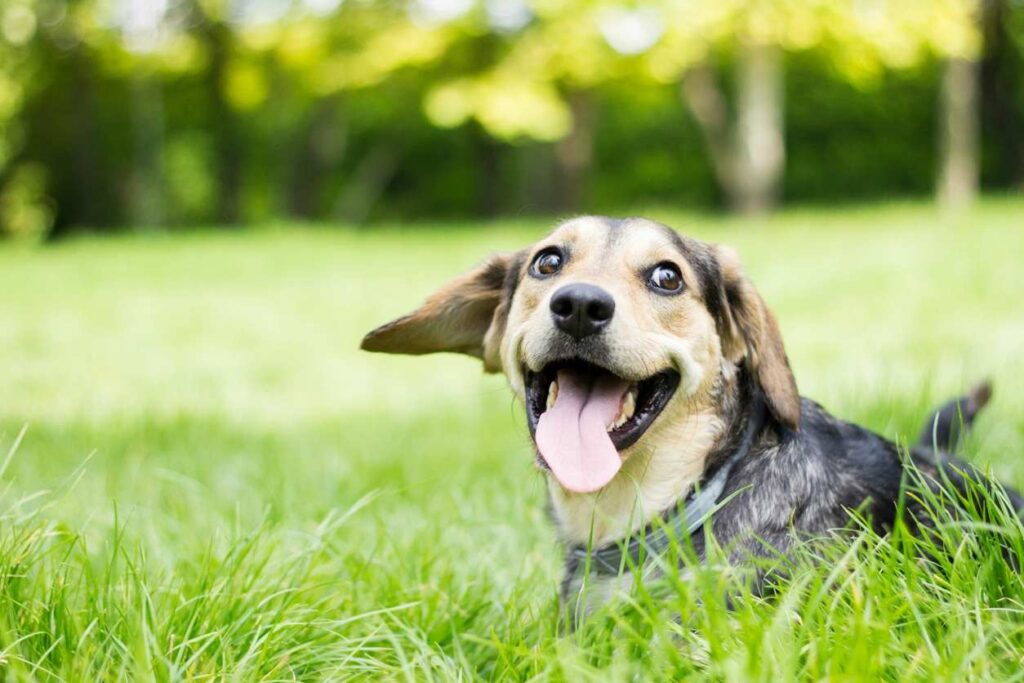
Dogs with friendly body language are usually eager for attention, whether this is to play, cuddle, or just to be close to you. Their body language looks soft and inviting, and you may notice them looking directly at you or a family member. Your dog may even be looking at everyone this way because they want to make friends. Signs of friendly body language include:
- Eyes are soft, and they tend not to stare for long periods of time.
- Ears sit naturally or are pinned back.
- Mouth is relaxed and open. They may even look like they’re smiling.
- Tail stays loose or wagging in wide, happy arcs.
- Tongue rests loosely inside or outside their mouth.
- Overall body posture will be balanced or leaning slightly forward, often with some wiggly energy.
Even the friendliest dogs need some downtime. Calm and relaxed dogs will display a neutral body language, where they are not actively looking to play, but not worried. Let’s look at some signs your dog is feeling relaxed.
Neutral Body Language
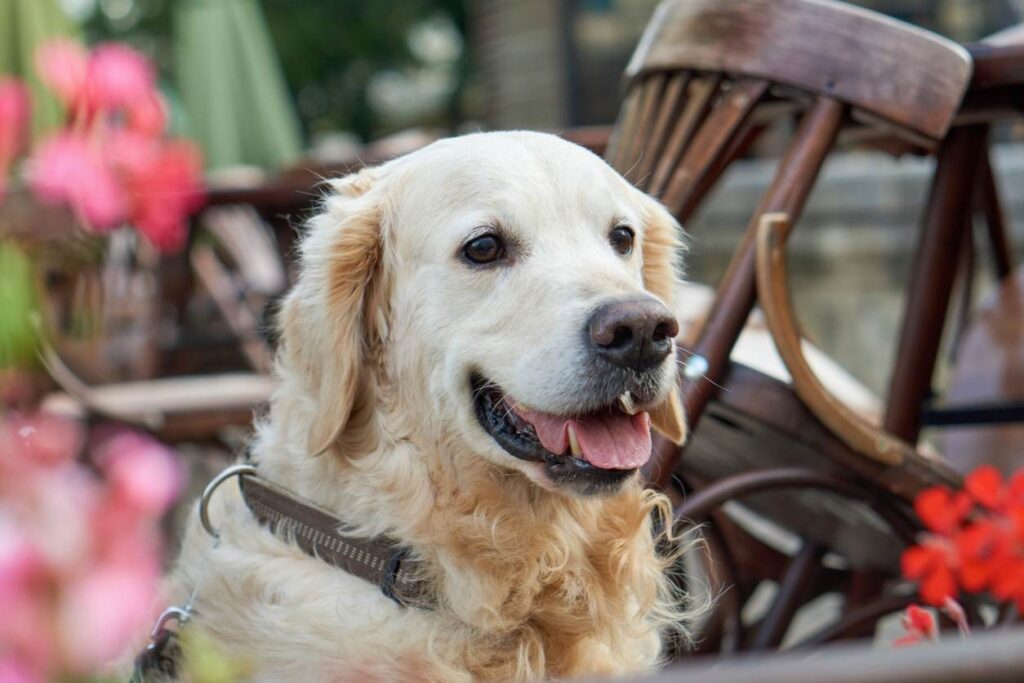
Neutral body language is when a dog is going about their day and not actively seeking to play or get attention. Perhaps your dog is just lying on the couch, walking around the backyard or taking a casual stroll with you on a walk. Signs of neutral body language include:
- Eyes will be soft, and they’ll be casually taking in their surroundings.
- Ears will be resting in a natural position. The natural position can depend on the breed; Australian Cattle Dogs and German Shepherds will often have their ears pointing up like little radar dishes. Cocker spaniels and beagles have softer, floppy ears.
- Mouth may be gently closed or slightly open with relaxed lips.
- Tail will be in a natural position, they won’t be wagging it around or tucking it in.
- Body posture will be evenly distributed.
Recognizing when a dog shifts from friendly or neutral body language to signs of reactivity or aggression is critical. Doing so can help you prevent escalation and respond effectively to reactive or aggressive behavior. This could be when a dog is resource guarding their bone and another dog is approaching, or when a reactive dog notices another dog during their walk, or when a dog is nervous during a vet exam and is staring at the veterinarian.
Precursors to Reactivity or Aggression
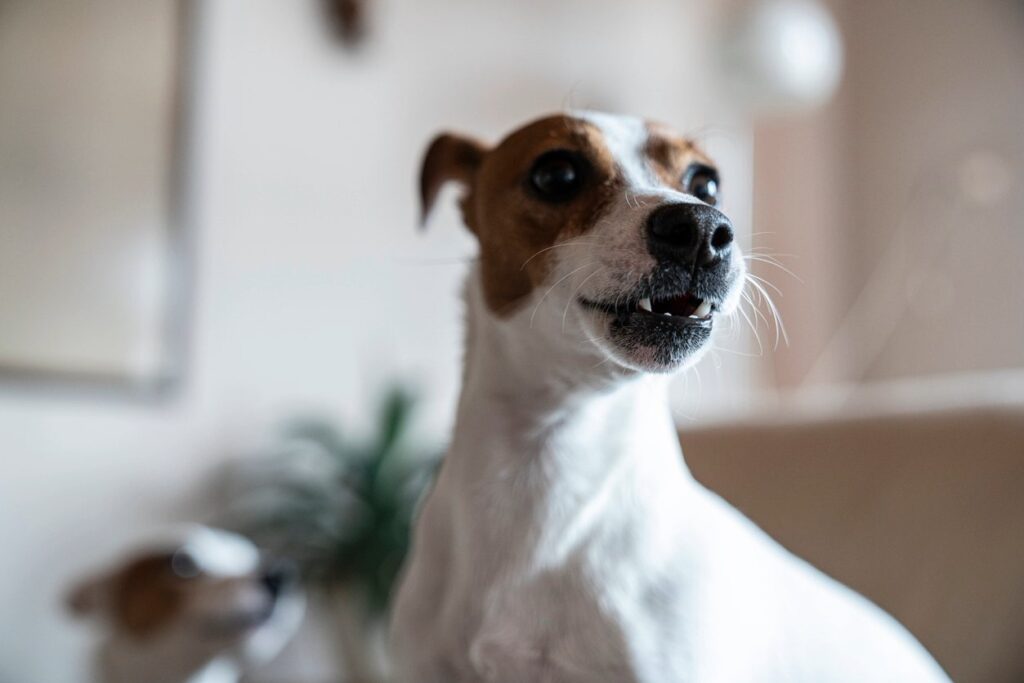
The precursor stage can, but doesn’t always, lead to reactive or aggressive behaviors. It’s important to pay attention to these early signs so you can better understand what your dog is communicating in the moment. Signs that a dog will be reactive or aggressive include:
- Eyes will be focused directly on the stimulus, and their focus will be hard to break. This could be a dog nearing what they are resource guarding, or a cat they are about to chase.
- Ears will be straight up. Dogs with naturally pointing ears, such as German Shepherds or Siberian Huskies, may have their ears pointing towards what they are focused on.
- Mouth will close with tight lips. You may notice that the corners of their mouth may be pulled forward.
- Tail may tightly wag from side to side (i.e. flagging), or become tucked under their stomach.
- Their body posture will be stiff, and slightly leaning forward.
At this stage, it will be harder to get your dog’s attention. There is often a pause before any aggressive or reactive behavior occurs. You may notice that your dog pauses for a few seconds before chasing your cat upstairs, or your dog may pause before being reactive to dogs approaching them at the dog park.
We Are Here to Help
We hope that this blog on how to read a dog’s body language can help you better identify behavior signals. Understanding these signals and training can help you respond appropriately with behavioral issues such as resource guarding, fearful behaviors, touch sensitivity, cat chasing behaviors, and reactivity.At Beyond the Dog Dallas, our training focuses on personalized training programs that focus on a dog’s overall behavioral wellness. Co-founded by Dr. Kristyn Echterling-Savage, Certified Applied Animal Behaviorist (CAAB) and Board Certified Behavior Analyst (BCBA), our programs draw from her research and decades of hands-on experience. All of our dog training programs are offered through one-on-one sessions at your home or local Dallas or Fort Worth neighborhoods, depending on your training goals. If you have any questions about our training programs or want to discuss any behavioral concerns, you can schedule a free consult today.