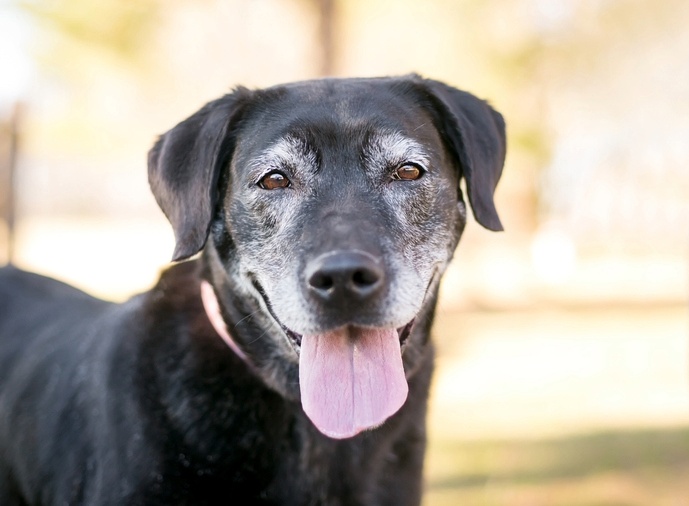
It is often assumed that adult or even senior dogs can’t be trained because they are set in their ways. It is true that they may pretend they can’t hear you until they see a treat, insist on sniffing every tree during their walk, or persistently steal food off the kitchen counter. However, adult dogs are capable of training and true behavior modification. Senior dogs will thrive on training, as it will keep them mentally and physically stimulated, and they will enjoy the routine.
For instance, take Heidi. She may not be a sprightly puppy anymore, but she knows how to open the pantry door. Impressive? Yes. Helpful? Not really. But with extra work on the “place” command, Heidi’s kitchen raids have dropped off, and she now earns treats for politely waiting on her bed while her parents cook dinner. In this blog, we’ll guide you through how to train your senior dog.
What exactly is a senior dog?
It’s commonly assumed that one human year equals seven dog years. However, scientific studies have shown that dogs age more slowly as they enter their adult years.
- The first year of a dog’s life equals fifteen human years (and we wonder why they nap so much).
- The second year is about nine human years.
- Every subsequent year amounts to roughly five human years.
Dog aging can also vary based on breed and size:
- Small Dogs (such as Maltese and Jack Russells) are generally considered older between 8 and 10 years.
- Medium to Large Breeds (like Boxers and German Shepherds) are typically considered older around 7 to 8 years.
- Giant Breeds (including Saint Bernards and Great Danes) are often considered older as early as 6 years.
Heidi, a mixed medium-sized dog, is currently nine years old, placing her in the “senior dog” category. This has entitled her to an orthopedic dog bed since her joints are a little stiffer than before, and she also values comfort.
Training tips:
Adjust your training style for senior dogs
When Heidi was younger, she enjoyed playing ball, practicing recall at the park, and going on long hikes. Although she still loves training (and the treats that come with it), we now focus on duration-based commands. Instead of using fast-paced repetitions like we do with puppies, we use slower repetitions that don’t require as much movement. This approach tires her out less quickly while still providing mental stimulation. Common duration-based commands include “Place,” “Wait,” and “Down Stay.”
Stick to a training routine:
Senior dogs tend to love routines. Heidi expects her evening walks at 6 pm, followed by some “place” practice as her parents prepare dinner. You could also use short training sessions after a potty break. Although she tires more quickly now, she enjoys the consistency that comes with training. Even a few minutes of training a day can greatly improve a senior dog’s obedience and manners. Remember to make training fun; your dog will love the one-on-one time with you and the treats that come with it.
Adjust training for any hearing or vision changes
As dogs age, their senses can start to fade. This is more common in particular breeds, including Australian Cattle Dogs, Dalmatians, and Cocker Spaniels, which are more likely to experience hearing difficulties.
Heidi, for instance, still has sharp hearing but her vision has decreased. She practices training with verbal cues rather than hand gestures. For Heidi’s senior friends with hearing loss, they benefit from training with hand cues rather than verbal commands.
Mind the heat and humidity
Senior dogs are more sensitive to high temperatures and humidity. While younger dogs may be eager to run and play on hot days. For senior dogs like Heidi, she likes to walk a few minutes, find the nearest patch of shade, and dramatically flop down to call it a day. Instead try the following:
- Train during early morning or late evening hours when temperatures are lower.
- Train indoors whenever possible, especially during peak heat in July and August.
- Bring water and a collapsible water bowl on all walks and outdoor training sessions.
- Avoid hot pavement by sticking to grassy or shaded areas that are gentler on their paws.
Remember to look for signs of fatigue, such as excessive panting, not wanting treats, or losing focus. If your dog shows any of these signs, it’s best to stop the session and allow them to rest. Training should always be a positive and comfortable experience, and there’s nothing wrong with adjusting the pace during the hotter parts of the year.
Senior dogs need healthier treats
Senior dogs have different dietary needs than puppies. They benefit from treats that are lower in calories, easier to chew, and higher in fiber, so they’re more digestible and help with weight management. Heidi loves apple and sausage bites, but we have also included other dog treat recommendations on our Amazon page.
We’re here to help
Does your senior dog have any behavioral or obedience concerns that you would like to address? Perhaps your senior dog is reactive to strangers during walks, or tries to run out the front door when it’s opened? We would love to help! You can schedule a free phone consultation with our Pet Behavior Experts. Our training programs are designed to meet your training goals, and we offer private one-on-one training at your home and local Tampa Bay neighborhood.
If you prefer to connect remotely or live outside our service areas, our co-founder and Certified Applied Animal Behaviorist, Dr. Echterling-Savage, offers virtual consultation programs. During these programs, she will design a training plan and provide support in how to achieve your training goals.
*This page contains Amazon affiliate links. If you choose to purchase after clicking a link, we may receive a commission at no extra cost to you.*