
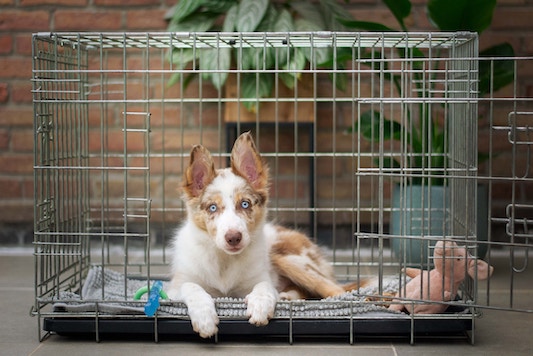
It’s time to check some emails, take a shower, or put the kids down for bed. You lead your puppy into the crate, gently close the door, and immediately, your puppy starts barking and whining. This lasts for what feels like forever. You don’t want to open the crate and reward the behavior, but you want to be sure your puppy isn’t stressed out or in need of something. So what do you do to get your puppy to stop whining?
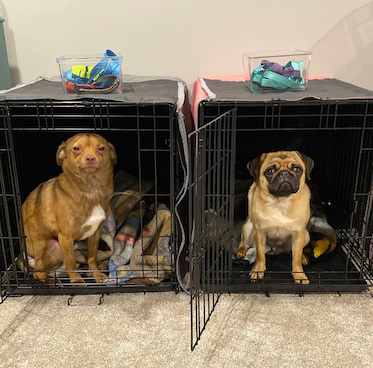
Why Does My Puppy Whine in the Crate?
Barking, whining, and crying in the crate, although potentially stress-inducing for the owner, is quite common in puppies and adolescent dogs. In most cases, a younger dog vocalizing in the crate is an attention-seeking behavior. It can be easily and even accidentally reinforced.
However, there is a possibility in some puppies that this behavior could indicate the onset of separation anxiety. If you aren’t sure which behavior is occurring, we recommend reading our blog on how to identify the differences between attention-seeking vocalizing and separation anxiety.
Whining in Puppies 8-9 Weeks Old
If you just brought a new puppy home, some crying and whining in the crate is normal, especially within those first three days. We recommend creating some separation between you and your new puppy so they aren’t constantly following you around. You can do this by tethering your puppy away from you (but still within eyesight for safety) throughout the day and having designated crate time. This will increase the likelihood that your puppy will be comfortable in the future when they are left alone.

If the crying is happening at night, place the crate on or next to your bed. When your puppy cries, you can stick your fingers through the crate to help comfort them. Each night, increase the distance the crate is away from the bed until it is in the desired location.
Whining in Adolescent Dogs
By 10 weeks old, the crate should be away from the bed. Do not give your puppy any more attention for whining or barking. If your puppy is still barking at night and having accidents in the crate, check out our housebreaking blog.
In puppies over 10 weeks old, adolescent dogs under 18 months, and some adult dogs, you can reduce barking for attention with a combination of:
1) Ignoring the attention barking.
2) Using positive reinforcement to shape the desired behavior, quietness, over time.
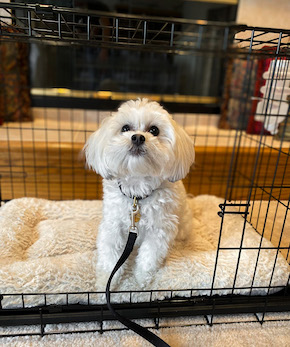
The first step is developing a positive association with the crate. With positive reinforcement and the process of shaping, you can increase the time your puppy calmly stays in their kennel.
How to Stop Whining for Attention in the Crate
- Remove any bedding or soft materials from the crate. Start with an empty crate with a plastic bottom.
- Toss treats into the crate and allow your puppy to walk in and out of the crate freely.
- Once your puppy starts to pause before coming back out of the crate, you will toss more treats into the crate, progressively increasing the amount of time your puppy stays in the crate.
- Once your puppy is comfortably staying in the kennel for longer periods of time, begin to gently close the crate door.
- As soon as the door is closed, immediately open it again and allow the puppy to come out.
- Repeat the above steps and begin to increase how long the crate door is closed for as long as your puppy is quiet.
- If your puppy is doing well and demonstrating calm and quiet behavior, you can begin to close the door and walk away.
- When you return, toss a treat into the kennel. Walk away again for a longer period of time, moving farther away each time. Walk back, toss a treat in, and repeat.
If your puppy is barking or whining, go back a step before adding additional distance or duration. We also recommend feeding your puppy’s meals in their crate. Spread the kibble along the crate bottom. If you need to be gone for a longer period of time, offer 2-3 appropriate toys and a food puzzle such as a frozen kong or a busy ball.
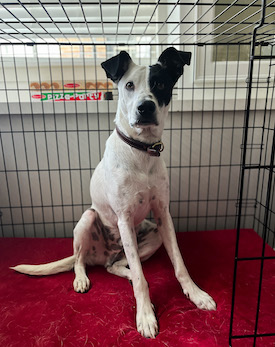
If after implementing these exercises, you are still having difficulty reducing whining in the crate, or you are unsure if the behavior is attention seeking, we recommend contacting your local behavior consultant for help. Schedule a free consultation with us today and we’ll help you restore peace and quiet to your home.
*This page contains Amazon affiliate links. If you choose to purchase after clicking a link, we may receive a commission at no extra cost to you.*