Bringing a new puppy home is often one of the most magical childhood memories. The excitement is undeniable—but it’s just as important to set clear expectations from day one, both for your family and for your puppy. Consistency is the foundation of successful training, especially when it comes to housebreaking and teaching good manners. In this post, we’ll explore practical ways to include children in the puppy raising, making it a rewarding experience for everyone.it.
Hand Feeding (Ages 2 and up)

Hand feeding is when you feed your puppy food directly from your hand instead of from a bowl. It can turn every mealtime into a training opportunity and bonding experience. Hand feeding is a fantastic way to get your puppy motivated to work for their kibble, and to develop a positive association! It provides your child with a low-effort way to bond with your puppy without disrupting formal training. It helps teach your puppy to take food gently from the hand, and boosts confidence in children who may feel a little nervous when approaching a puppy. To make it more challenging for your puppy, practice auto-sits. You can have your child wait for the puppy to sit without them asking, then offer the kibble.
Trainer Tip: If your child is nervous, have your child drop some kibble, treats or toys near or at your puppy’s feet to eat. You can tether your puppy during this exercise. This will reinforce appropriate behavior around your child and gives them an opportunity to bond with their puppy comfortably. Your child can then try to hand feed your puppy when they are more confident.
Name Recognition (Ages 5 and up)
We recommend involving children in teaching their puppy how to respond to their name. Earning reinforcement for name recognition is not only fun for your puppy. It is also a crucial step in getting your puppy to develop a reliable recall.
You can ask your child to call out your puppy’s name and then reward them with kibble or treats. Food is used as positive reinforcement, as it motivates your puppy to respond and recognize their name. If your family is still deciding on a name, now is a great time to ensure your child agrees with the choice. Otherwise, your puppy might start learning the name your child prefers, whether or not it’s the one everyone else agreed on.
Trainer Tip: Avoid repeating your puppy’s name multiple times in a row unless you are ready to reinforce with a treat. You want your puppy to learn that when we say their name, there is intention behind it, such as a command. Overusing or misusing their name can lessen its meaning, reducing the chances your puppy will listen. An example of misusing their name is mostly calling out to them when they are in trouble, which may accidentally lead to them associating their name with a punishment.
Body Handling (Puppies under 6 months of age and for children ages 7 and up)
It is important to create a positive association for your puppy with hands reaching towards them and physical touch at a young age. This training serves as a preventative measure to help reduce the likelihood of your puppy developing aversive and unwanted behaviors towards physical handling and people reaching for them in the future. The earlier you can start with your puppy, the better!
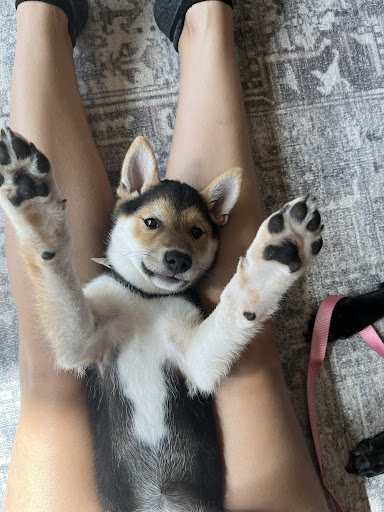
Body Handling Exercise:
- Start with your puppy on the ground.
- Reach for the puppy and grab their paw.
- As soon as you grab the paw, praise and deliver a treat.
- You can repeat this with other parts of their body, such as their ears, tail, and collar.

You can also flip the puppy on their back in your lap, as demonstrated by one of our trainers above, if they are doing well with the exercise. If there is an area your puppy is more sensitive to, repeat this exercise with that same area. If you notice your puppy engaging in unwanted behavior such as growling or snapping, discontinue immediately and contact your local behavior consultant.
We are here to help
Would you like help in teaching your puppy high-level manners and obedience? Do you have any behavioral concerns that you would like to address? You can schedule a free consultation with our Pet Behavior Team. All of our training programs are conducted through one-on-one sessions held at your home and your local Houston neighborhood.
Our co-founder and Certified Applied Animal Behaviorist, Dr. Echterling-Savage, provides virtual consultation programs. During these programs, she will develop a personalized training plan that provides support to achieve your training goals.
At Beyond the Dog, our training is science-based and backed by over 20 years of experience. Co-founded by Dr. Kristyn Echterling-Savage, Certified Applied Animal Behaviorist (CAAB) and Board Certified Behavior Analyst (BCBA), our programs are informed by her research and decades of hands on experience. Every dog and household is unique, which is why our training is fully personalized to your goals.