Bringing your new puppy home to your children can be the most exciting time! Growing up with a dog teaches kids valuable lessons on patience, animal care, and responsibility. Just as importantly, it gives them the chance to build a special bond with their new furry friend. To help, ewe have put together some age-appropriate ways with how to include kids in puppy training.
Including kids in puppy training
Teaching your child how to treat your puppy is vital to encourage a positive relationship between your puppy and your child. Encouraging your child to stay calm and gentle with the puppy not only helps your puppy learn good behaviors, but also teaches your child how to approach dogs safely. Learning to respect boundaries and read your puppy’s body language will help your child grow into a confident and respectful dog owner.
It’s tempting to wrestle or rough house with your puppy but this can easily lead to and reinforce problem behaviors like play-biting and jumping. Instead, have your child pet your puppy on the neck and chest (not the head) and praise them. You can also give your puppy a treat whenever they are exhibiting calm behaviors around your kids, like lying down or sitting. Puppies and kids both can get overwhelmed during playtime, which can lead to undesirable interactions. Puppies tend to play with children the way they would play with other puppies, but humans don’t have a fur coat to protect against playful puppy claws and teeth. Make sure that every interaction your child and puppy have is a positive one, which starts with reinforcing calm behaviors.
For some more examples of common puppy behaviors, check out our Co-founder Sean Savage in our vlog designed to help you navigate puppyhood!

Hand feeding (ages 2+)
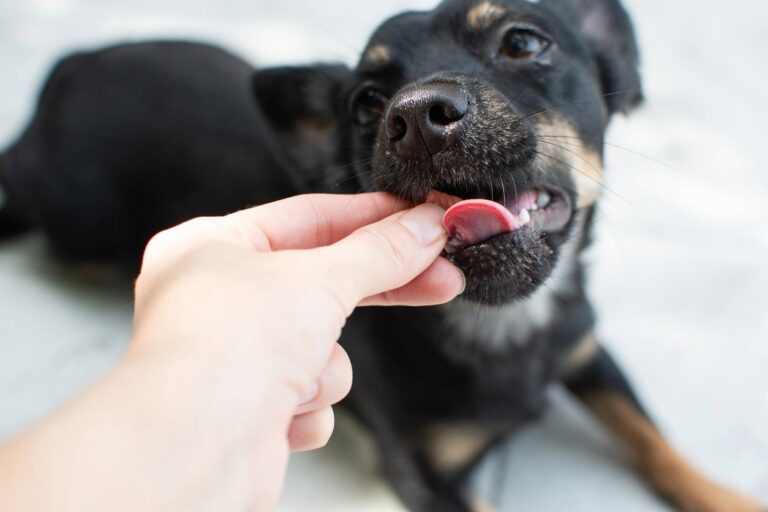
Mealtimes are a great time to get some training in for both your puppy and your kids! Instead of giving the bowl of food to your puppy, have your kids hand-feed him. This will teach your puppy how to take food nicely from their hands and also strengthen the bond between your puppy and child. You can tether your puppy during this exercise. For more information about hand feeding and other ways to feed your puppy, check out our blog post “Feeding Your Puppy: How to Utilize Mealtimes”.
Under adult supervision, let your child feed the puppy small handfuls of kibble. To make the activity a little more challenging for the puppy, wait until they sit before giving the food. Rather than asking for a sit, encourage patience by waiting for the puppy to offer it on their own, or gently lure them into position.
Trainer Tip: If your child is a little scared or wary of your new puppy, it is important to make sure that every interaction is a happy one. If your puppy jumps or play-bites your kids, hold on to their leash so they can’t jump. Have your child drop the kibble when the puppy is sitting nicely, and then work up to hand-feeding once they are comfortable.heir kibble when they are sitting nicely and work their way up to hand feeding when they are comfortable.
Name recognition (ages 5+)
Using name recognition as a game with your puppy is a wonderful way to involve your kids in training! The goal of name recognition is that your Using name recognition as a game with your puppy is a wonderful way to involve your kids in training! The goal of name recognition is that your puppy will not only look at you when you say their name but also come to you. Starting early and staying consistent will strengthen this skill over time.
Avoid saying your puppy’s name randomly throughout the day without a reward or only saying their name when they are in trouble. Doing these things can cause your puppy to be less attentive to their name and can sometimes create a negative association with their name. It is vital that their name is paired with good things so that they come to you when you say it!
Body handling (for puppies under 6 months of age)
Body handling exercises will teach your puppy to be more comfortable and tolerant when being touched. This helps them to better handle real-life situations, such as vet examinations and when a child accidentally steps on their tail or pulls their ears. To create a positive association with body handling you can:
- Ask your child to pick up one of their paws and then give them a treat or some kibble
- Have them repeat this step with other body areas, including the ears, belly, ears, stomach and tail.
- If your puppy doesn’t like particular areas being touched, an adult should handle that area until the puppy is more comfortable.
You can tell your child this is an exercise for vet visits, but they may think your puppy will learn to let them play dress up, or paint their nails.
We’re here to help
Do you need help teaching your puppy high-level obedience and manners? Would you like further help with involving your child in puppy raising? We’d love to help. Schedule a free consult today.
Beyond the Dog training is science-based and backed by over 20 years of experience. Co-founded by Dr. Kristyn Echterling-Savage, Certified Applied Animal Behaviorist (CAAB) and Board Certified Behavior Analyst (BCBA), our programs draw from her research and decades of hands-on work. Because every dog and household is unique, we personalize our training to your goals.