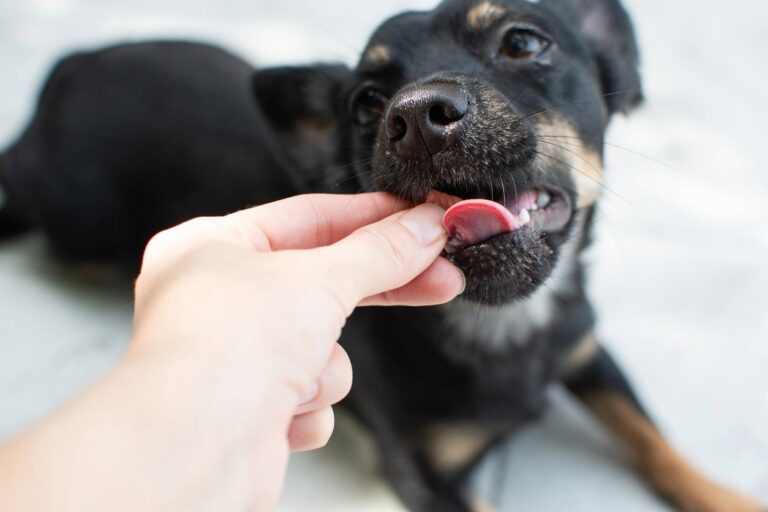
Do you want an easy command to teach your puppy that is also useful in everyday life? The “Down” command is a fan favorite! In this blog, we will discuss Puppy Training: Teaching the down command with distractions. Think of it as your built-in pause button when life gets busy.
Why “Down” Matters

The “Down” command helps your dog stay grounded and relaxed, even in an exciting environment. It’s useful for situations where you need your puppy to hold still for longer stretches of time. Once learnt and managed correctly, puppies can hold this command for up to 30 minutes or longer! Here are some situations when the “Down” command is useful:
- Socializing at a café or restaurant.
- When guests come to your home, and your puppy wants to play with them constantly.
- During mealtime, so your puppy doesn’t beg for food while you eat.
- Keeping your puppy still during vet visits and grooming appointments.
The Three D’s of Down
Like any obedience skill, the “Down” command doesn’t truly become reliable until your puppy can handle it under different conditions. Your puppy may reliably stay in the down position at home, but it’s not useful if your puppy doesn’t stay down at the park, wrestles with your vet during an exam, or continues to lap your table at a restaurant. To help maintain consistent obedience, you can challenge your training through the “Three D’s”: Distance, Duration, and Distractions. Each one of these will strengthen your puppy’s ability to stay calm and settled when it matters most.
Distance:
It’s easy to have your puppy in the down position when they’re right in front of you, but is your puppy listening to you when they’re across the room? You should gradually increase the distance between you and your puppy during training to best prepare for real-life moments when you can’t be right next to them. This could include putting them in down while you answer the door. Or wanting them to give you some space while you eat your meal at the dining table.
Duration
When teaching down, you want to be able to enforce the command for an extended duration. Teaching duration helps with patience and impulse control. With practice, your dog will learn that down isn’t just a two-second posture. It’s a way for them to settle until they are released. Duration is what makes this command so useful during meals, long conversations, or during vet visits.
Distractions
For a puppy, the world is full of distractions: Squirrels at the park, pedestrians walking past at the farmers market, and the smell of dinner cooking, to name a few. Teaching your puppy to hold a down with distractions requires patience. But it will keep your puppy safe and give you peace of mind. After all, a dog that can stay calm through many different sounds, smells, people, and dogs is a puppy you can confidently take out to explore many different places and situations.
We’re here to help
“Are you struggling with teaching the down command? The good news is that you don’t have to tackle it alone.
At Beyond the Dog, our training is grounded in science and backed by over 20 years of experience. Co-founded by Dr. Kristyn Echterling-Savage, a Certified Applied Animal Behaviorist (CAAB), Board Certified Behavior Analyst (BCBA), and one of the nation’s top dog behavior experts, our programs are informed by her decades of hands-on experience and her research in dog behavior modification. We know that every dog (and every household) is unique, which is why our programs are fully customized to your needs. Our goal is simple: help you see meaningful progress in the shortest time possible while building a happier relationship with your dog.
At Beyond the Dog, we understand that lasting behavior change comes from more than just a few training tips — it requires a clear, structured approach incorporating science-backed training methodology. That’s why we’ve developed a training program unlike anything else in the area, designed to maximize progress while making life easier for busy dog owners. We offer in-home programs and virtual programs, so training occurs where you actually need it. Schedule a free consult today.”